In April 2015, B.K. Stevens debuted the blog series “The First Two Pages,” hosting craft essays by short story writers and novelists analyzing the openings of their own work. The series continued until just after her death in August 2017, and the full archive of those essays can be found at Bonnie’s website. In November 2017, the blog series relocated to my website, and the archive of this second stage of the series can be found here.
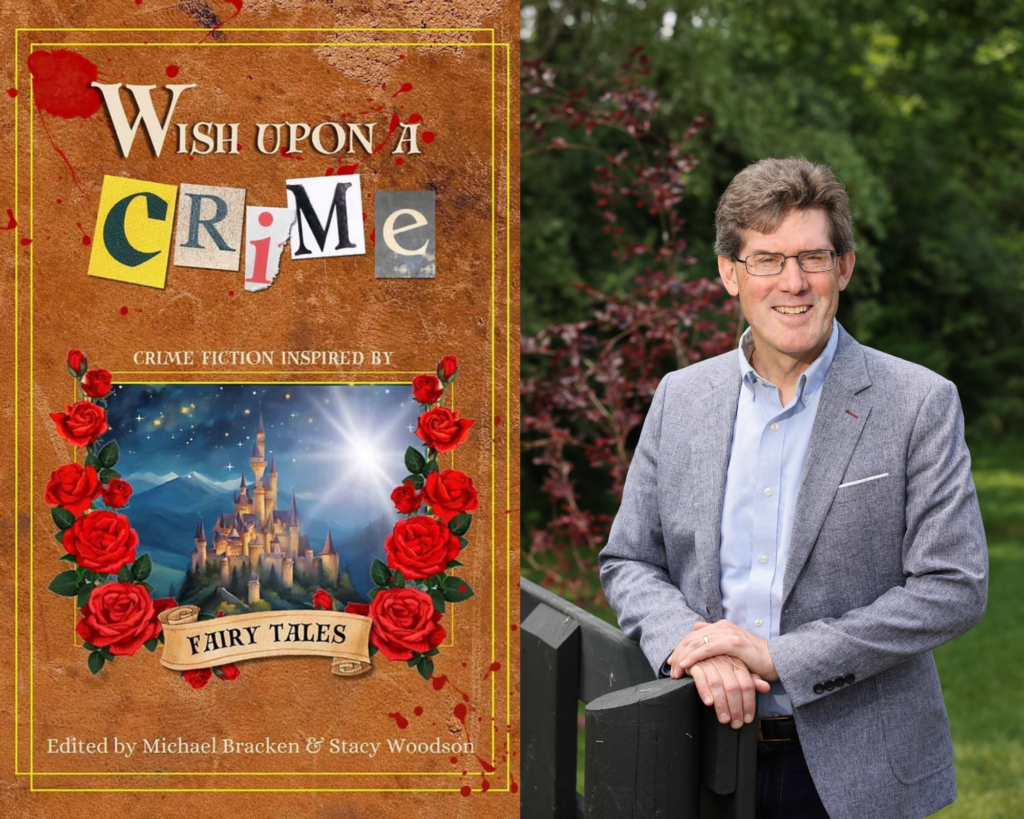
This week’s essay celebrates the publication (also this week!) of the anthology Wish Upon a Crime: Crime Fiction Inspired by Fairy Tales, edited by Michael Bracken and Stacy Woodson and published by Level Best Books. As the bookjacket tells us, “Fairy tales at their core are dark and suspenseful. These stories are no different. Today’s most respected short-story writers reimagine familiar classics where the line between good and evil isn’t always clear, dreams don’t come true, and there are no happily-ever-afters.” Each of the editors offers a story (on “Three Billy Goats Gruff” and “The Gingerbread Man” respectively!), and other contributors include Donna Andrews, David Dean, John M. Floyd, Barb Goffman, Debra H. Goldstein, James A. Hearn, Adam Meyer, Tom Milani, Laura Oles, Josh Pachter, Joseph S. Walker, and Andrew Welsh-Huggins.
That last author alphabetically, Andrew Welsh-Huggins, steps to the foreground today to talk about his story, “Jack and the Beanstalk,” and to explore some differences between storytelling and storymaking in a fascinating essay below.
Andrew’s short fiction has been selected three times for the Best Mystery Stories of the Year and twice for The Best Private Eye Stories of the Year, and he’s been an editor himself—of the anthology Columbus Noir. He’s also the author of the Barry Award-nominated Mercury Carter thriller series; the Shamus Award–nominated Andy Hayes private eye series; and the stand-alone crime novel The End of the Road. You can find out more about him and his work at his website.
And stay tuned next week for another contributor to Wish Upon a Crime: Tom Milani!
Please use the arrows and controls at the bottom of the embedded PDF to navigate through the essay. You can also download the essay to read off-line.